
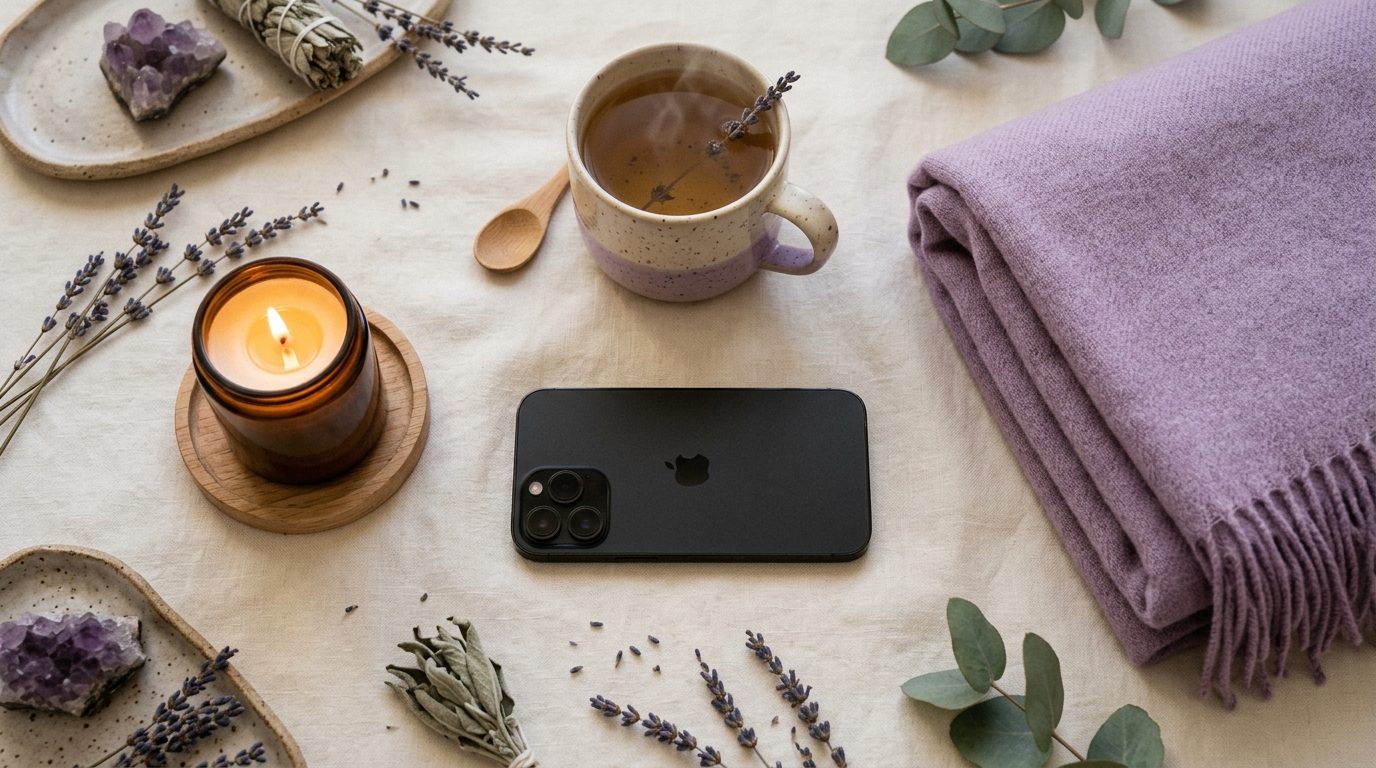
 Article cover image
Switching off is a skill, not a switch. If your mind keeps running long after the work is done, you are not doing anything wrong. You are just out of practice. The good news is that a few small, realistic habits can teach your body how to power down again.
Give the day an ending
When work bleeds into evening, your brain never gets the signal that it is over. Create a small closing routine, even something as simple as shutting the laptop, writing tomorrow’s top three tasks, and stepping away. That small ending tells your mind the day has a finish line, so it can stop running the race.
Put a wall between you and your phone
You do not have to quit your phone, just add a little friction. Leave it in another room for the first and last half hour of the day. Turn off the notifications that do not truly need you. Most of the noise that keeps us wired is optional, we have just stopped noticing it.
Move the stress out of your body
Stress is physical, so it needs a physical release. A short walk, some slow stretching, or a few minutes of deep breathing all help discharge the tension of the day. This is also exactly where massage earns its place, it does in an hour what we rarely manage to do for ourselves.
Do one thing with no purpose
So much of our day is useful and measured. Rest needs the opposite. Listen to music, sit outside, cook slowly, do something that is not trying to achieve anything. Purposeless time is not wasted time. It is where your mind finally exhales.
Protect your wind down like a meeting
You would not double book an important meeting, so treat your rest with the same respect. Block a little time in the evening that is only yours and defend it. It feels indulgent at first. After a week it feels essential.
You do not need to overhaul your life to feel calmer. Pick one of these and try it for a few days. Small, repeated signals are how you teach a busy mind that it is finally safe to rest.
Let an hour be only about you
Book a session and let someone else take care of the switching off.