
 Article cover image
Pregnancy is beautiful and it is also hard on the body. Aching hips, a tired lower back, swollen legs and restless nights are all common. A prenatal massage, done properly, can bring real relief. Here is what it involves and how we keep it safe and comfortable.
When is it suitable?
Most therapists work with mothers from the second trimester onward, once the early weeks have passed. Every pregnancy is different, so the honest answer is simple, check with your doctor or midwife first. If your pregnancy is healthy and low risk and they are happy for you to have a massage, we are glad to look after you.
How the positioning works
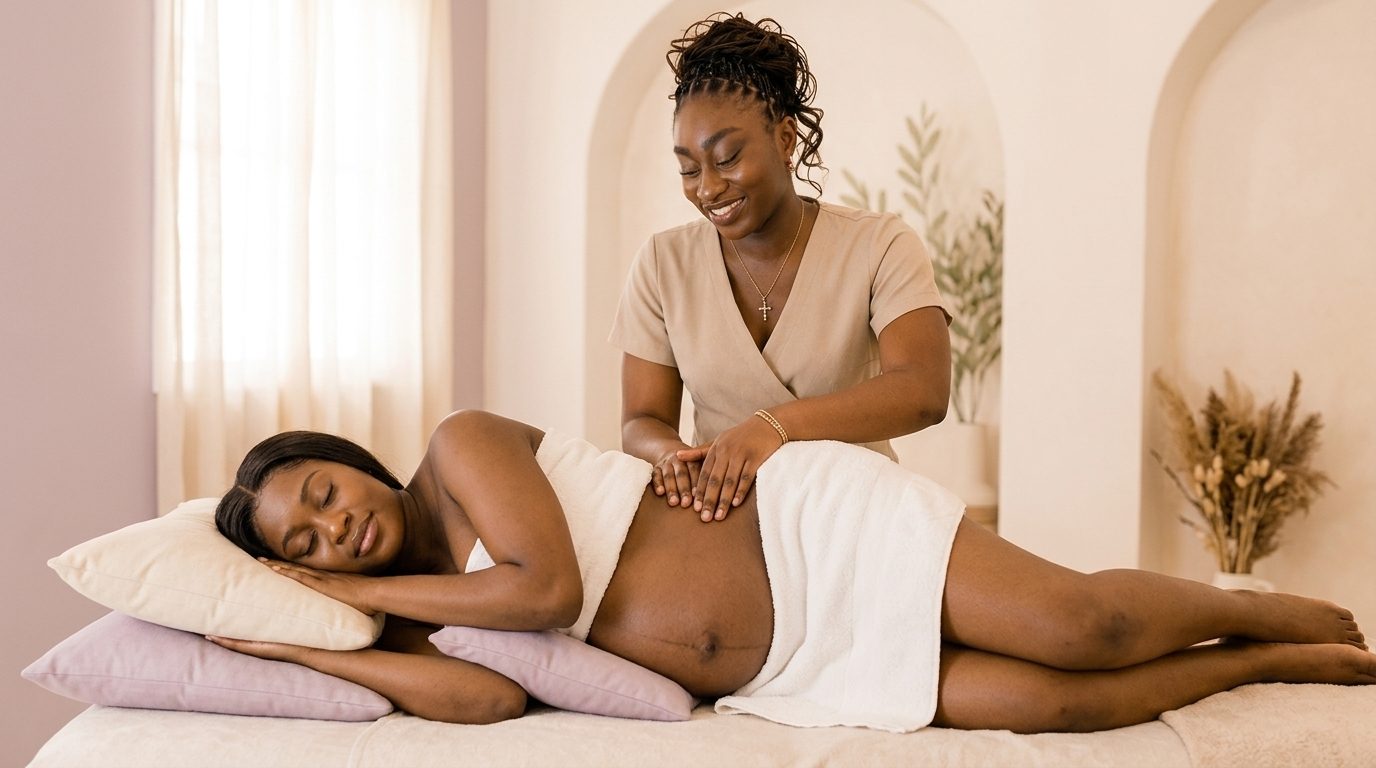
You will not lie flat on your stomach. Instead, your therapist positions you comfortably on your side, supported by cushions and bolsters that take the pressure off your back, hips and bump. Comfort is the priority, and your therapist will keep checking that you feel well supported throughout.
What it helps with
A gentle prenatal session can ease lower back and hip pain, reduce swelling in tired legs, relieve tension in the shoulders and neck, and simply help you rest. Many mothers say the deep calm and better sleep afterward are just as valuable as the physical relief.
What to expect on the day
The pressure is lighter and slower than a regular massage, focused on comfort and circulation rather than deep work. Certain areas and pressure points are avoided as a precaution. You stay in control the whole time, so if anything feels off, you only have to say the word and your therapist adjusts.
A gentle note
This should always feel soothing, never uncomfortable. If at any point something does not feel right, tell your therapist immediately. Your wellbeing and your baby’s come first, always.
Carrying a baby is a lot to hold. An hour of careful, expert care is a lovely way to give some of that weight back to yourself for a while.
Gentle care, brought to you
Our prenatal-trained therapists come to you, so there is no travel and no stress.