
 Article cover image
Here is a truth every serious athlete learns the hard way: you do not get stronger during the workout. You get stronger while you recover from it. Train hard and skip recovery, and you plateau or get hurt. Massage is one of the simplest ways to recover smart.
Why recovery is where the gains live
Training breaks your body down a little on purpose. The adaptation, the actual improvement, happens afterward while you rest and repair. If you never give your muscles the chance to recover fully, you are constantly building on tired foundations. Good recovery is not the opposite of hard training, it is what makes hard training pay off.
What sports massage actually does
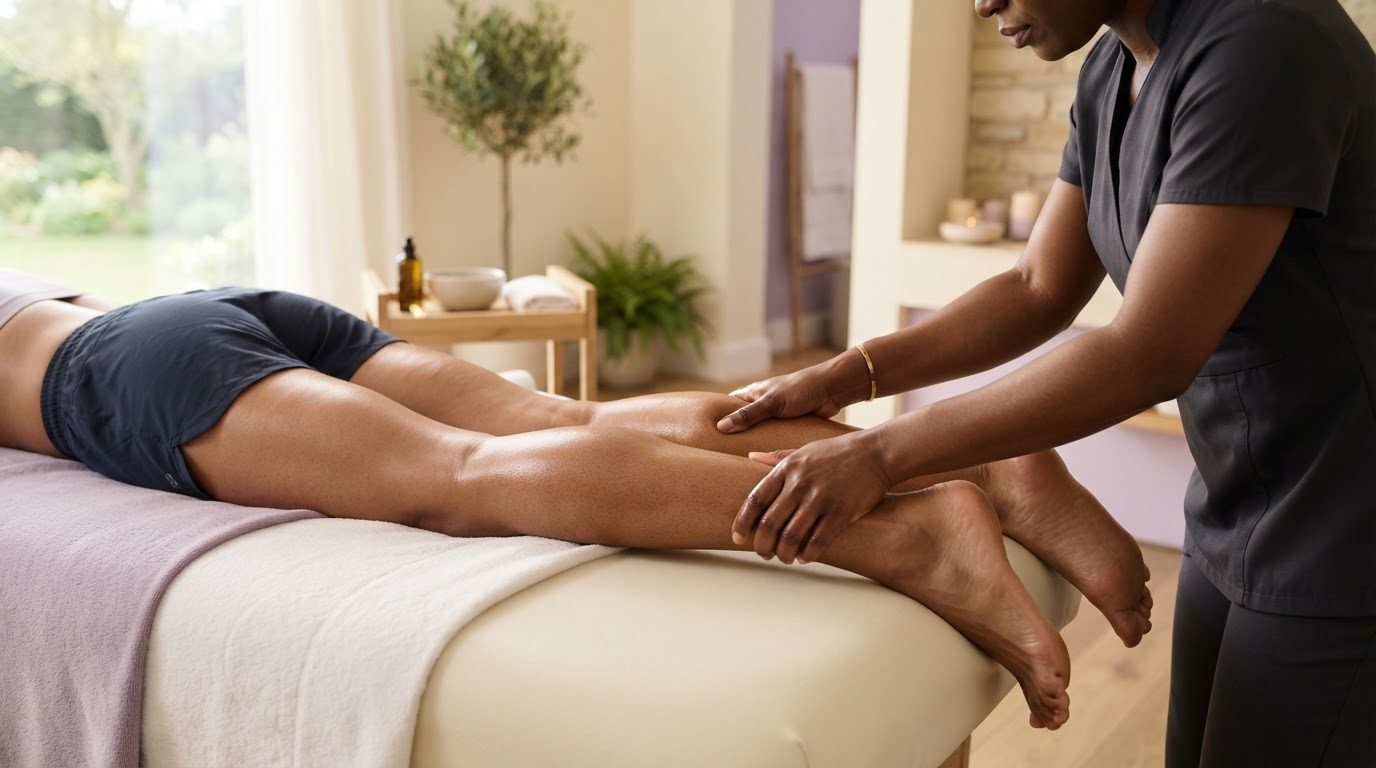
A sports and recovery massage helps flush out the fatigue that builds up after intense sessions, eases tight and overworked muscles, and improves your range of movement. Loosening the areas that get stiff, like hips, hamstrings, calves and shoulders, helps you move more freely and with better form, which matters as much for performance as it does for comfort.
Lower your injury risk
Most training injuries do not come out of nowhere. They build slowly from imbalances, tight spots and small niggles you push through. Regular massage helps you catch and release that tension before it becomes something that sidelines you for weeks. Staying available to train is one of the most underrated performance advantages there is.
Timing it right
A firmer, more focused session works well a day or two after a hard effort, when it can help you bounce back. A lighter, flushing session is better in the day or so before a big event, when you want to feel loose but not worked over. If you have a competition coming up, tell your therapist and they will adjust accordingly.
Make it a habit, not a rescue
The athletes who benefit most do not wait until something hurts. They build regular massage into their routine the same way they plan training and nutrition. Treat recovery as part of the work, not a reward for it, and your body will keep showing up for you.
Train hard, yes. But recover just as deliberately. That is where the next personal best actually comes from.
Recover without leaving home
We bring the table to you, so recovery fits around your training, not the other way round.